記事検索

About PSPINC and Japan

https://jp.bloguru.com/ken

フリースペース


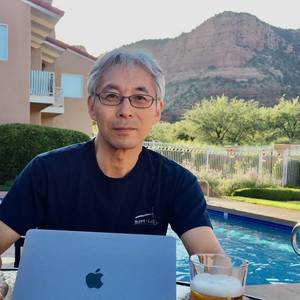
Kenichi Uchikura
Founder & CEO, Pacific Software Publishing, Inc. (PSPINC)
Bellevue, Washington

Kenichi Uchikura is the founder and CEO of Pacific Software Publishing, Inc. (PSPINC), a technology company based in the Seattle area. After graduating from Azusa Pacific University in 1983, he began his professional career in Japan before being assigned to establish his employer’s Seattle subsidiary. That international business experience laid the foundation for his entrepreneurial journey.

In 1987, Uchikura founded PSPINC, building the company into a long-standing provider of software development, web hosting, business communications, and SaaS solutions serving clients in both the United States and Japan. Originally known for Japanese software localization and cross-cultural technology services, PSPINC evolved alongside the growth of the Internet into a provider of digital infrastructure, custom web applications, and business communication platforms.

For nearly four decades, Uchikura has focused on helping organizations leverage technology to improve communication, strengthen customer relationships, and expand business opportunities. His work reflects a commitment to innovation, practical problem-solving, and fostering business connections between Japan and the United States.

🌐 https://pspinc.compspinc.com

The Japanese Spirit of Gratitude and Loyalty

スレッド
The Japanese Spirit of Gratitu...
The Japanese Spirit of Gratitude and Loyalty
 
When people think about Japanese values, four important concepts often appear together: On (恩), Giri (義理), Ongaeshi (恩返し), and Chugi (忠義). While each word has its own meaning, they form a chain of thought that has influenced Japanese society for centuries.
 
Interestingly, these words and ideas originally came from China through Confucian teachings and classical literature. However, after arriving in Japan, they gradually evolved over many centuries and became uniquely Japanese in their interpretation and application. Today, the Japanese understanding of these concepts differs significantly from their original Chinese meanings.
 
It begins with On, which means a favor, kindness, or benefit received from someone else. In Japan, there is a strong awareness that no one succeeds alone. We are helped by our parents, teachers, friends, employers, and communities. This creates a deep sense of gratitude.
 
That gratitude leads to Giri, often translated as duty or obligation. When someone helps you, there is a feeling that you should not simply accept the favor and forget it. You should acknowledge it and respond appropriately.
 
The action of returning that kindness is called Ongaeshi, or repaying a favor. One of Japan’s most famous folktales, The Crane’s Return of a Favor, is built around this idea. Ongaeshi is more than a transaction—it is a sincere expression of appreciation.
 
Finally comes Chugi, or loyalty. While Ongaeshi may be a single act, Chugi is a long-term commitment. It means remaining faithful to those who have supported you, whether they are family, friends, an organization, or even a cause you believe in.
 
In simple terms:
 
Receive kindness (On), feel responsibility (Giri), repay it (Ongaeshi), and remain loyal (Chugi).
 
These ideas have shaped Japanese culture for generations and continue to influence personal relationships, business practices, and community life today. They remind us that gratitude is not just a feeling—it is something that should be expressed through actions and sustained through loyalty over time. In many ways, these values are among the foundations of what makes Japanese society uniquely Japanese.
 
 
For Service and Iqnury : Call 1-800-232-3989 or 425-957-0808

Pacific Software Publishing, Inc.
Kenichi Uchikura
President / CEO
Pacific Software Publishing, Inc.
ken.uchikura@pspinc.com
Twitter | Facebook | Linked In

__..-・**・-..__..-・**・-..__..-・**・-..__..-・**・-..__

ABOUT PSPINC

PSPINC (Pacific Software Publishing, Inc.), based in Bellevue, Washington founded in 1987, has provided web hosting, email hosting, and internet solutions since 1997. The company operates data centers in the United States and Japan and supports businesses worldwide with reliable technology and multilingual service.

For more information or to discuss your needs, please call (800) 232-3939 or (425) 957-0808, or email Info@PSPINC.com

__..-・**・-..__..-・**・-..__..-・**・-..__..-・**・-..__

#Business #CrossCultural #Entrepreneurship #History #Innovation #Japan #JapanInsights #JapaneseCulture #Kaizen #Leadership #Management #Networking #PSPINC #Seattle #Technology #USJapan

ワオ!と言っているユーザー

Yebisu Shrine: Nishinomiya Jinja – The God of Business Success

スレッド
Yebisu Shrine: Nishinomiya Jin...
Yebisu Shrine: Nishinomiya Jinja – The God of Business Success
 
When people think of Japanese shrines, they often think of places to pray for health, safety, or good fortune. But for business owners, entrepreneurs, and merchants, one shrine stands above all others: Nishinomiya Jinja in Hyogo Prefecture.
 
Known affectionately as “Ebessan,” Nishinomiya Jinja is the head shrine of more than 3,500 Ebisu shrines throughout Japan. It is dedicated to Ebisu, the Shinto deity of prosperity, commerce, fishing, and honest hard work. For centuries, business people have visited this shrine to pray for success and growth in their enterprises.
 
Every January, the shrine hosts the famous Toka Ebisu Festival, attracting more than one million visitors. The highlight is the unique “Lucky Man Race” (Fukuotoko Erabi), where participants sprint from the shrine gate to the main hall to become the year's first worshippers and earn the title of "Lucky Man."
 
What makes Ebisu especially popular is that he is considered a practical god. Unlike many deities associated with war or nobility, Ebisu represents the common merchant, fisherman, and entrepreneur. He reminds us that prosperity comes from diligence, integrity, and serving others well.
 
As the founder of a business myself, I find the message of Ebisu timeless. Success rarely comes from luck alone. It comes from consistent effort, taking care of customers, and building trust over many years. Perhaps that is why so many Japanese business owners continue to visit Nishinomiya Jinja year after year.
 
Whether you are starting a new company, growing an existing one, or simply hoping for a prosperous future, a visit to Nishinya Jinja offers both inspiration and a connection to a tradition that has supported Japanese commerce for over a thousand years.
 
 
For Service and Iqnury : Call 1-800-232-3989 or 425-957-0808

Pacific Software Publishing, Inc.
Kenichi Uchikura
President / CEO
Pacific Software Publishing, Inc.
ken.uchikura@pspinc.com
Twitter | Facebook | Linked In

__..-・**・-..__..-・**・-..__..-・**・-..__..-・**・-..__

ABOUT PSPINC

PSPINC (Pacific Software Publishing, Inc.), based in Bellevue, Washington founded in 1987, has provided web hosting, email hosting, and internet solutions since 1997. The company operates data centers in the United States and Japan and supports businesses worldwide with reliable technology and multilingual service.

For more information or to discuss your needs, please call (800) 232-3939 or (425) 957-0808, or email Info@PSPINC.com

__..-・**・-..__..-・**・-..__..-・**・-..__..-・**・-..__

#Business #CrossCultural #Entrepreneurship #History #Innovation #Japan #JapanInsights #JapaneseCulture #Kaizen #Leadership #Management #Networking #PSPINC #Seattle #Technology #USJapan

ワオ!と言っているユーザー

A Frog in a Well Knows Nothing of the Ocean

スレッド
A Frog in a Well Knows Nothing...
A Frog in a Well Knows Nothing of the Ocean
 
One of my favorite Japanese sayings is:
 
"A frog in a well knows nothing of the ocean."
(I no naka no kawazu taikai wo shirazu – 井の中の蛙大海を知らず)
 
The image is simple. A frog lives its entire life in a small well. Looking up, it can see the sky and the walls around it. To that frog, the well is the whole world. It has no idea that beyond the well lies a vast ocean.
 
This proverb reminds us that our knowledge and experiences are often limited by our surroundings. When we stay within our comfort zone, we may believe that our way of thinking is the only correct way. We may assume that what works in our town, company, or country must work everywhere.
 
Travel, meeting people from different cultures, and learning new ideas help us climb out of our own wells. The more we experience the world, the more we realize how much we do not know. That realization is not a weakness—it is the beginning of wisdom.
 
As someone who has lived and worked in both Japan and the United States, I have often discovered that there are many different ways to solve the same problem. What seems obvious in one culture may be completely different in another.
 
The lesson of this proverb is simple: never stop learning, never assume you know everything, and always be willing to look beyond the walls of your own well. The ocean is much larger than we imagine.
 
 
For Service and Iqnury : Call 1-800-232-3989 or 425-957-0808

Pacific Software Publishing, Inc.
Kenichi Uchikura
President / CEO
Pacific Software Publishing, Inc.
ken.uchikura@pspinc.com
Twitter | Facebook | Linked In

__..-・**・-..__..-・**・-..__..-・**・-..__..-・**・-..__

ABOUT PSPINC

PSPINC (Pacific Software Publishing, Inc.), based in Bellevue, Washington founded in 1987, has provided web hosting, email hosting, and internet solutions since 1997. The company operates data centers in the United States and Japan and supports businesses worldwide with reliable technology and multilingual service.

For more information or to discuss your needs, please call (800) 232-3939 or (425) 957-0808, or email Info@PSPINC.com

__..-・**・-..__..-・**・-..__..-・**・-..__..-・**・-..__

#Business #CrossCultural #Entrepreneurship #History #Innovation #Japan #JapanInsights #JapaneseCulture #Kaizen #Leadership #Management #Networking #PSPINC #Seattle #Technology #USJapan

ワオ!と言っているユーザー

Japan's Lost 30 Years: How Did It Start?

スレッド
Japan's Lost 30 Years: How Did...
Japan's Lost 30 Years: How Did It Start?

Many people trace the beginning of Japan's "Lost 30 Years" back to the Plaza Accord of 1985. At the time, Japan's economy was booming, driven by exports of automobiles, electronics, and industrial products. The Japanese yen traded at around 240 yen to the U.S. dollar, making Japanese goods highly competitive around the world.
 
The Plaza Accord was an agreement between the United States, Japan, West Germany, France, and the United Kingdom to reduce the value of the U.S. dollar. As a result, the yen rapidly strengthened, eventually reaching nearly 120 yen per dollar. This made Japanese exports more expensive and raised concerns about economic slowdown.
 
To keep the economy growing, Japan lowered interest rates and encouraged lending. Money became easy to borrow, and investment poured into stocks and real estate. Asset prices soared to extraordinary levels. At the peak of the bubble, some estimates claimed that the land under the Imperial Palace in Tokyo was worth more than all the real estate in California.
 
The bubble could not last forever. In the early 1990s, stock and real estate prices collapsed. Banks were left with bad loans, businesses reduced investment, and consumers became cautious.
 
While economists still debate the exact causes, many agree that the combination of a rapidly rising yen, easy-money policies, and the bursting of the asset bubble marked the beginning of Japan's long period of slow growth known as the "Lost 30 Years."
 
 
For Service and Iqnury : Call 1-800-232-3989 or 425-957-0808

Pacific Software Publishing, Inc.
Kenichi Uchikura
President / CEO
Pacific Software Publishing, Inc.
ken.uchikura@pspinc.com
Twitter | Facebook | Linked In

__..-・**・-..__..-・**・-..__..-・**・-..__..-・**・-..__

ABOUT PSPINC

PSPINC (Pacific Software Publishing, Inc.), based in Bellevue, Washington founded in 1987, has provided web hosting, email hosting, and internet solutions since 1997. The company operates data centers in the United States and Japan and supports businesses worldwide with reliable technology and multilingual service.

For more information or to discuss your needs, please call (800) 232-3939 or (425) 957-0808, or email Info@PSPINC.com

__..-・**・-..__..-・**・-..__..-・**・-..__..-・**・-..__

#Business #CrossCultural #Entrepreneurship #History #Innovation #Japan #JapanInsights #JapaneseCulture #Kaizen #Leadership #Management #Networking #PSPINC #Seattle #Technology #USJapan

ワオ!と言っているユーザー

Melon Pan: A Japanese Bread with a Curious Name

スレッド
Melon Pan: A Japanese Bread wi...
Melon Pan: A Japanese Bread with a Curious Name

One of my favorite treats to pick up in Japan is Melon Pan. If you have never seen one before, it looks like a sweet bun with a crisp, cookie-like crust on top. The funny thing is that despite its name, traditional Melon Pan usually contains no melon at all.
 
The name comes from its appearance. The crisscross pattern on the surface resembles the skin of a melon, which is how it earned the name. The inside is soft and fluffy, while the outside has a slightly crunchy, sweet texture. It is a simple combination, but it works wonderfully.
 
Melon Pan can be found almost everywhere in Japan—bakeries, convenience stores, train stations, and supermarkets. Over the years, bakers have become creative, introducing versions filled with cream, chocolate, matcha, or even actual melon flavoring.
 
What I enjoy most about Melon Pan is that it is uniquely Japanese. While bread itself was introduced from the West, Japan adapted it and created something entirely its own. It is a perfect example of how Japanese culture often takes an imported idea and refines it into something different.
 
If you ever visit Japan, I highly recommend trying a freshly baked Melon Pan. It may become one of your favorite Japanese snacks as well.
 
 
For Service and Iqnury : Call 1-800-232-3989 or 425-957-0808

Pacific Software Publishing, Inc.
Kenichi Uchikura
President / CEO
Pacific Software Publishing, Inc.
ken.uchikura@pspinc.com
Twitter | Facebook | Linked In

__..-・**・-..__..-・**・-..__..-・**・-..__..-・**・-..__

ABOUT PSPINC

PSPINC (Pacific Software Publishing, Inc.), based in Bellevue, Washington founded in 1987, has provided web hosting, email hosting, and internet solutions since 1997. The company operates data centers in the United States and Japan and supports businesses worldwide with reliable technology and multilingual service.

For more information or to discuss your needs, please call (800) 232-3939 or (425) 957-0808, or email Info@PSPINC.com

__..-・**・-..__..-・**・-..__..-・**・-..__..-・**・-..__

#Business #CrossCultural #Entrepreneurship #History #Innovation #Japan #JapanInsights #JapaneseCulture #Kaizen #Leadership #Management #Networking #PSPINC #Seattle #Technology #USJapan

ワオ!と言っているユーザー

One Japanese Phrase, Two Opposite Meanings

スレッド
One Japanese Phrase, Two Oppos...
One Japanese Phrase, Two Opposite Meanings
 
One of the fascinating things about the Japanese language is how much meaning depends on context. A perfect example is the expression:
 
「人の嫌がることを進んでする」
(Hito no iyagaru koto o susunde suru)
 
A direct translation might be: “to willingly do things that people dislike.” However, this phrase can have two completely opposite meanings.
 
In a negative sense, it describes someone who intentionally does things that make other people unhappy. Such a person may enjoy causing trouble, creating discomfort, or making life difficult for others. In this interpretation, the phrase refers to a troublemaker.
 
But there is also a positive meaning. It can describe someone who willingly takes on tasks that nobody else wants to do. Examples include cleaning public spaces, picking up trash, handling difficult jobs, or helping others without expecting recognition. In this case, the phrase is a compliment and describes a person with a strong sense of responsibility and service.
 
The difference lies in what “people dislike” refers to. Does it mean things that hurt other people, or tasks that people do not want to do themselves?
 
Japanese often leaves such distinctions to context, and native speakers usually understand the intended meaning immediately. It is a wonderful example of how language can reflect culture, values, and ways of thinking—all within a single phrase.
 
 
For Service and Iqnury : Call 1-800-232-3989 or 425-957-0808

Pacific Software Publishing, Inc.
Kenichi Uchikura
President / CEO
Pacific Software Publishing, Inc.
ken.uchikura@pspinc.com
Twitter | Facebook | Linked In

__..-・**・-..__..-・**・-..__..-・**・-..__..-・**・-..__

ABOUT PSPINC

PSPINC (Pacific Software Publishing, Inc.), based in Bellevue, Washington founded in 1987, has provided web hosting, email hosting, and internet solutions since 1997. The company operates data centers in the United States and Japan and supports businesses worldwide with reliable technology and multilingual service.

For more information or to discuss your needs, please call (800) 232-3939 or (425) 957-0808, or email Info@PSPINC.com

__..-・**・-..__..-・**・-..__..-・**・-..__..-・**・-..__

#Business #CrossCultural #Entrepreneurship #History #Innovation #Japan #JapanInsights #JapaneseCulture #Kaizen #Leadership #Management #Networking #PSPINC #Seattle #Technology #USJapan

ワオ!と言っているユーザー

Ken Uchikura Newsletter Vol. 393 Trust and Contracts

スレッド
Ken Uchikura Newsletter Vol. 3... Ken Uchikura Newsletter Vol. 393 Thumbnail

Trust and Contracts

People often describe Japan as a “trust-based society” while they see the U.S. as a “contract-based society.”

When people hear this, sometimes they assume it means Japanese people keep their promises while Americans don’t. However, that’s not quite accurate. In reality, both cultures deeply value keeping their word. The real difference lies in the framework that supports those promises.

In Japan, interpersonal relationships are often the very foundation of business, and they highly prioritize long-term partnerships, mutual introductions, established track records, and deep-seated trust.

“If Mr. Uchikura says so, it must be reliable.”
“We’ve worked with this company for many years, so we can trust them.”

This accumulation of human connection is what drives business forward. As a result, even when contracts exist in Japan, people often approach disputes first through discussion and mutual understanding. While the paperwork matters, Japanese people often see preserving the relationship as the ultimate priority.

In contrast, the United States operates a bit differently. Of course, trust matters in the U.S., too. However, they view businesses and corporations as entities entirely independent from the individuals running them.

  • If a point of contact leaves the company, the contract remains.
  • If the CEO changes, the contract remains.
  • Even if the deal is between close friends, a contract is a contract.

In short, the system relies on rules rather than individuals. Rather, they’re designed precisely because trust exists—to prevent misunderstandings and clearly define expectations.

In Japan, trust comes first, and the contract complements it.
In the US, the contract comes first, and they build trust upon it.

Neither approach is superior to the other. Both are simply deeply rooted systems shaped by the distinct histories of each society.

When doing business in Japan, it’s important to value personal relationships and trust. When doing business in the United States, it is equally important to ensure that contract terms are clearly defined, even when relationships are friendly.

Perhaps the biggest pitfall in international business is assuming our own common sense is universal. Understanding cultural differences is an essential skill in global business.


For Service and Iqnury : Call 1-800-232-3989 or 425-957-0808

Pacific Software Publishing, Inc.
Kenichi Uchikura
President / CEO
Pacific Software Publishing, Inc.
ken.uchikura@pspinc.com
Twitter | Facebook | Linked In

__..-・**・-..__..-・**・-..__..-・**・-..__..-・**・-..__

ABOUT PSPINC

PSPINC (Pacific Software Publishing, Inc.), based in Bellevue, Washington founded in 1987, has provided web hosting, email hosting, and internet solutions since 1997. The company operates data centers in the United States and Japan and supports businesses worldwide with reliable technology and multilingual service.

For more information or to discuss your needs, please call (800) 232-3939 or (425) 957-0808, or email Info@PSPINC.com

__..-・**・-..__..-・**・-..__..-・**・-..__..-・**・-..__

#Business #CrossCultural #Entrepreneurship #History #Innovation #Japan #JapanInsights #JapaneseCulture #Kaizen #Leadership #Management #Networking #PSPINC #Seattle #Technology #USJapan

ワオ!と言っているユーザー

Japan's Industrial Power on Display

スレッド
Japan's Industrial Power on Di...
Japan's Industrial Power on Display

On my way from Kansai International Airport to Osaka, I was struck by the sight of the Sakai-Senboku Coastal Industrial Zone. Massive storage tanks, refineries, power plants, and chemical facilities stretch along Osaka Bay, surprisingly close to the city center.
 
This is one of Japan's great industrial complexes, built to efficiently process imported raw materials and support the nation's manufacturing economy. For a country with limited natural resources, facilities like these helped fuel Japan's postwar growth and technological success.
 
What is particularly impressive is that these facilities continue to operate under some of the world's strictest environmental regulations. Emissions, water quality, safety standards, and environmental monitoring are all closely regulated, demonstrating that heavy industry and environmental responsibility can coexist.
 
Many visitors admire Osaka's modern skyline, but the industrial infrastructure that helped build that prosperity is just as impressive. Seeing such a vast concentration of industry so close to a major metropolitan area is a reminder of the engineering, planning, and hard work that continue to support Japan's economy today.
 
 
For Service and Iqnury : Call 1-800-232-3989 or 425-957-0808

Pacific Software Publishing, Inc.
Kenichi Uchikura
President / CEO
Pacific Software Publishing, Inc.
ken.uchikura@pspinc.com
Twitter | Facebook | Linked In

__..-・**・-..__..-・**・-..__..-・**・-..__..-・**・-..__

ABOUT PSPINC

PSPINC (Pacific Software Publishing, Inc.), based in Bellevue, Washington founded in 1987, has provided web hosting, email hosting, and internet solutions since 1997. The company operates data centers in the United States and Japan and supports businesses worldwide with reliable technology and multilingual service.

For more information or to discuss your needs, please call (800) 232-3939 or (425) 957-0808, or email Info@PSPINC.com

__..-・**・-..__..-・**・-..__..-・**・-..__..-・**・-..__

#Business #CrossCultural #Entrepreneurship #History #Innovation #Japan #JapanInsights #JapaneseCulture #Kaizen #Leadership #Management #Networking #PSPINC #Seattle #Technology #USJapan

ワオ!と言っているユーザー

My Arrival at Kansai International Airport

スレッド
My Arrival at Kansai Internati...
My Arrival at Kansai International Airport

I arrived at Kansai International Airport (KIX) yesterday and was reminded why I enjoy flying into this airport. KIX is one of Japan's major international gateways, yet the arrival experience can be surprisingly smooth. Immigration and customs were very fast, and I was through the airport much quicker than I expected.
 
After collecting my luggage, I took the airport limousine bus to Amagasaki Station, where I was picked up. The bus ride was comfortable and made for an easy transition from the airport to the city.
 
Many people know Kansai International Airport because it was built on a man-made island in Osaka Bay. It is also famous for the engineering challenges associated with the island slowly settling over time. News reports and documentaries often focus on the airport's construction, the enormous cost, and the efforts required to maintain it.
 
However, when you actually arrive at KIX, none of that is obvious. The airport feels modern, spacious, and efficient. There is no sense that you are standing on a massive artificial island or that it has faced decades of engineering challenges. To most travelers, it simply feels like a well-designed international airport.
 
Sometimes there is a big difference between how a place is described in the news and how it feels in real life. Kansai International Airport is a good example of that.
 
 
For Service and Iqnury : Call 1-800-232-3989 or 425-957-0808

Pacific Software Publishing, Inc.
Kenichi Uchikura
President / CEO
Pacific Software Publishing, Inc.
ken.uchikura@pspinc.com
Twitter | Facebook | Linked In

__..-・**・-..__..-・**・-..__..-・**・-..__..-・**・-..__

ABOUT PSPINC

PSPINC (Pacific Software Publishing, Inc.), based in Bellevue, Washington founded in 1987, has provided web hosting, email hosting, and internet solutions since 1997. The company operates data centers in the United States and Japan and supports businesses worldwide with reliable technology and multilingual service.

For more information or to discuss your needs, please call (800) 232-3939 or (425) 957-0808, or email Info@PSPINC.com

__..-・**・-..__..-・**・-..__..-・**・-..__..-・**・-..__

#Business #CrossCultural #Entrepreneurship #History #Innovation #Japan #JapanInsights #JapaneseCulture #Kaizen #Leadership #Management #Networking #PSPINC #Seattle #Technology #USJapan

ワオ!と言っているユーザー

Wishing Well

スレッド
Wishing Well
We were saddened to hear about the powerful earthquake that struck the Philippines.
 
On behalf of PSPINC and myself, I would like to extend our thoughts and prayers to everyone affected. We hope for the safety of all residents, and we wish strength and a swift recovery to the communities impacted by this disaster.
 
 
For Service and Iqnury : Call 1-800-232-3989 or 425-957-0808

Pacific Software Publishing, Inc.
Kenichi Uchikura
President / CEO
Pacific Software Publishing, Inc.
ken.uchikura@pspinc.com
Twitter | Facebook | Linked In

__..-・**・-..__..-・**・-..__..-・**・-..__..-・**・-..__

ABOUT PSPINC

PSPINC (Pacific Software Publishing, Inc.), based in Bellevue, Washington founded in 1987, has provided web hosting, email hosting, and internet solutions since 1997. The company operates data centers in the United States and Japan and supports businesses worldwide with reliable technology and multilingual service.

For more information or to discuss your needs, please call (800) 232-3939 or (425) 957-0808, or email Info@PSPINC.com

__..-・**・-..__..-・**・-..__..-・**・-..__..-・**・-..__

#Business #CrossCultural #Entrepreneurship #History #Innovation #Japan #JapanInsights #JapaneseCulture #Kaizen #Leadership #Management #Networking #PSPINC #Seattle #Technology #USJapan

ワオ!と言っているユーザー

  • ブログルメンバーの方は下記のページからログインをお願いいたします。
    ログイン
  • まだブログルのメンバーでない方は下記のページから登録をお願いいたします。
    新規ユーザー登録へ
ハッピー
悲しい
びっくり